
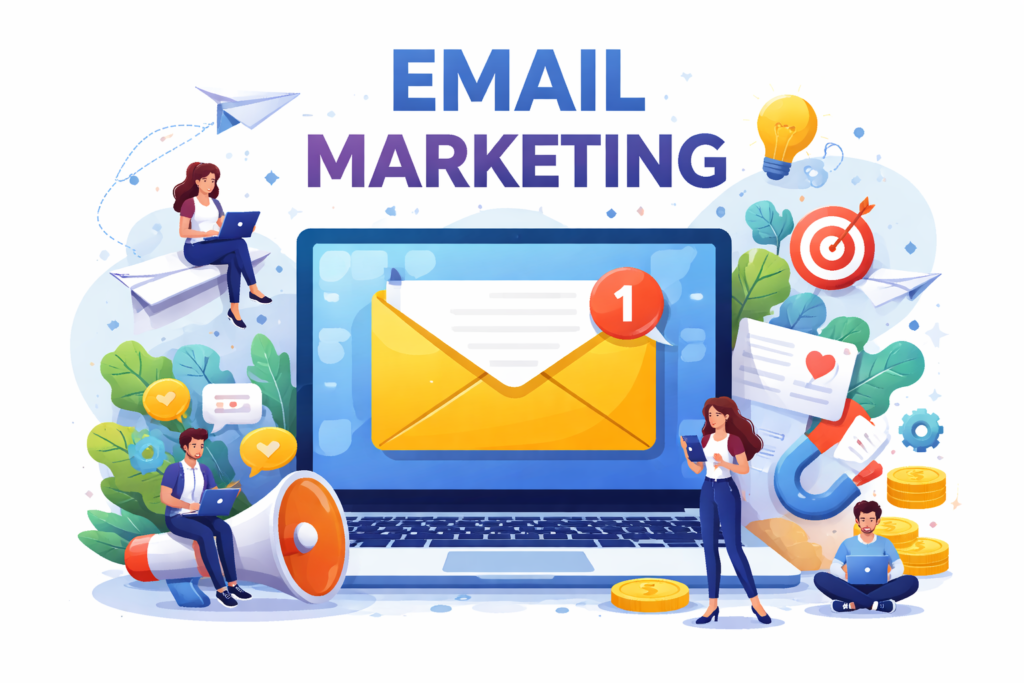
In today’s fast-evolving digital landscape, businesses are constantly searching for effective ways to connect with their audience. While social media platforms and paid ads continue to grow, one strategy remains consistently powerful—email marketing for beginners.
Email marketing combines communication, engagement, and promotion, not just advertising. It is about building relationships, nurturing leads, and turning subscribers into loyal customers. Even in 2026, email marketing continues to deliver one of the highest returns on investment (ROI) compared to other digital marketing strategies.
If you are new to email marketing, this comprehensive guide will walk you through everything you need to know—from understanding the basics to launching your first successful campaign.
What is Email Marketing
Email marketing is a form of digital promotion where messages are sent directly to a targeted audience to advertise products, provide valuable content, or strengthen connections.
These emails can include:
- Newsletters
- Promotional offers
- Product updates
- Educational content
- Event invitations
Unlike social media, where algorithms control visibility, email gives you direct access to your audience’s inbox.
Why Email Marketing Still Matters in 2026
Many beginners wonder if email marketing is still relevant. The answer is a strong yes. Here’s why:
1. High Return on Investment
Email marketing reliably generates strong returns on investment, establishing itself as one of the most budget-friendly marketing strategies.
2. Direct Communication
You communicate directly with your audience without relying on third-party platforms.
3. Personalization Opportunities
You can tailor messages based on user behavior, preferences, and demographics.
4. Ownership of Audience
Your email list belongs to you, unlike followers on social media platforms.
5. Automation Capabilities
Modern tools allow you to automate campaigns, saving time while increasing efficiency.
How Email Marketing Works
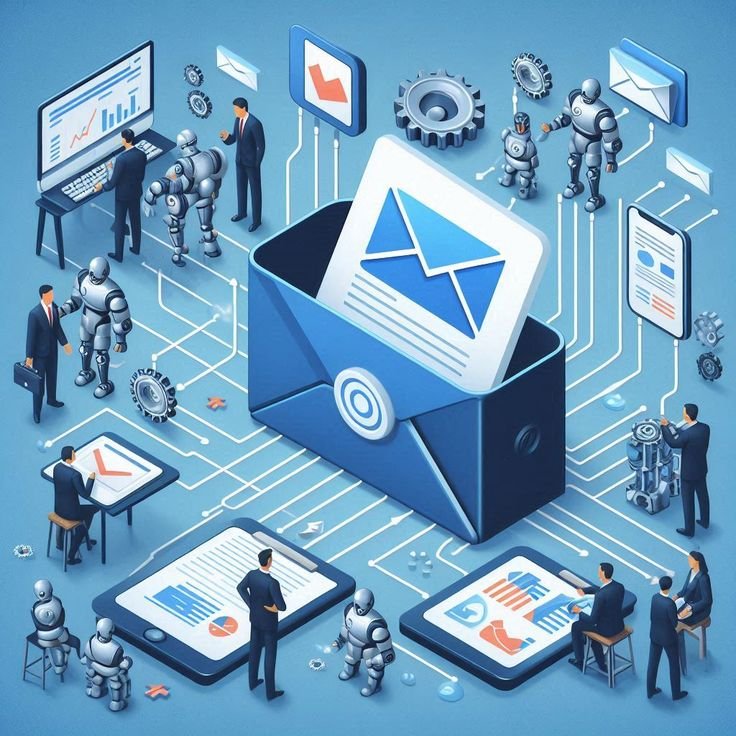
Understanding how email marketing works is crucial for beginners.
Step 1: Build an Email List
Gather contact emails from individuals eager to engage with your business.
Step 2: Choose an Email Marketing Platform
Use tools to manage subscribers and send campaigns.
Step 3: Create Valuable Content
Write emails that provide value, not just sales pitches.
Step 4: Send Campaigns
Schedule and send emails to your subscribers.
Step 5: Analyze Results
Track open rates, click-through rates, and conversions.
Building Your First Email List
Your email list is the foundation of your email marketing success.
1. Create a Lead Magnet
Offer something valuable in exchange for email addresses, such as:
- Free eBooks
- Checklists
- Templates
- Discount codes
2. Use Signup Forms
Place signup forms on:
- Your website homepage
- Blog posts
- Landing pages
3. Leverage Social Media
Showcase your newsletter on your social channels to grow subscribers.
4. Use Pop-Ups (Smartly)
Well-timed pop-ups can increase conversions without annoying users.
5. Avoid Buying Email Lists
Purchased lists harm your reputation and reduce engagement.
Choosing the Right Email Marketing Tool
Choosing the appropriate platform is crucial for those just starting out. Look for tools that offer:
- Easy-to-use interface
- Automation features
- Analytics and reporting
- Templates for emails
Popular options include beginner-friendly platforms with drag-and-drop builders and automation workflows.
Types of Email Campaigns
Understanding different types of email campaigns will help you plan your strategy.
1. Welcome Emails
Sent when someone subscribes. These create a strong first impression.
2. Newsletter Emails
Regular updates that keep your audience informed and engaged.
3. Promotional Emails
Used to promote products, services, or special offers.
4. Transactional Emails
Order confirmations, receipts, and shipping updates.
5. Re-engagement Emails
Target inactive subscribers and bring them back.
How to Write Effective Emails
Writing emails that people actually read is a key skill.
1. Craft a Strong Subject Line
The success of your email open rate hinges on your subject line.
Tips:
- Keep it short and clear
- Use curiosity or urgency
- Avoid spammy words
2. Personalize Your Message
Personalize emails by including the subscriber’s name and aligning content with their preferences.
3. Focus on Value
Provide useful information, not just promotions.
4. Use Clear Call-to-Actions (CTA)
Tell readers exactly what to do next.
Examples:
- “Download Now”
- “Shop Today”
- “Learn More”
5. Keep It Simple
Avoid long paragraphs. Use short sentences and bullet points.
Email Design Best Practices
Design plays a crucial role in engagement.
1. Mobile-Friendly Layout
Most users check emails on mobile devices.
2. Use Visuals
Include images, but don’t overload your email.
3. Maintain Brand Consistency
Use consistent colors, fonts, and tone.
4. Use White Space
Makes your email easier to read.
Email Automation for Beginners
Automation allows you to send emails based on user actions.
Common Automation Workflows:
- Welcome series
- Abandoned cart reminders
- Follow-up emails
- Birthday or anniversary emails
Automation saves time and increases efficiency while improving user experience.
Segmentation: The Key to Better Results
Segmentation involves splitting your email subscribers into focused groups.
You can segment based on:
- Location
- Purchase history
- Behavior
- Interests
This helps you send more relevant and personalized emails.
Understanding Email Metrics
Tracking performance helps you improve your campaigns.
Important Metrics:
- Open Rate: Percentage of people who open your email
- Click-Through Rate (CTR): Percentage who click links
- Conversion Rate: Percentage who complete an action
- Bounce Rate: Emails that couldn’t be delivered
- Unsubscribe Rate: People who opt out
Common Email Marketing Mistakes to Avoid
Beginners often make these mistakes:
1. Sending Too Many Emails
This can annoy subscribers.
2. Ignoring Mobile Optimization
Emails must look good on smartphones.
3. Not Testing Emails
Always test before sending.
4. Poor Subject Lines
Weak subject lines reduce open rates.
5. Lack of Personalization
Generic emails perform poorly.
Email Marketing Trends in 2026
To stay ahead, you need to follow current trends.
1. AI-Powered Personalization
AI helps deliver highly targeted content.
2. Interactive Emails
Polls, quizzes, and clickable elements increase engagement.
3. Privacy-Focused Marketing
Being open and obtaining permission matters now more than ever.
4. Hyper-Segmentation
More detailed audience targeting.
5. Automation Growth
More businesses are adopting advanced workflows.
Step-by-Step Guide to Launch Your First Campaign
Step 1: Define Your Goal
Decide what you want to achieve.
Step 2: Build Your List
Start collecting emails using lead magnets.
Step 3: Choose a Platform
Select an email marketing tool.
Step 4: Create Your Email
Write and design your email.
Step 5: Test Your Email
Check for errors and responsiveness.
Step 6: Send Your Campaign
Choose the best time to send.
Step 7: Analyze Results
Review metrics and improve.
Best Practices for Long-Term Success
- Be consistent with your emails
- Focus on building relationships
- Provide value in every email
- Keep learning and testing
- Stay updated with trends
How Email Marketing Helps Small Businesses
For small businesses, email marketing is especially powerful.
Benefits:
- Low cost
- High ROI
- Direct communication
- Customer retention
- Brand awareness
It empowers small businesses to rival bigger corporations successfully.
What Email Marketing Will Look Like in 2026 and the Years Ahead
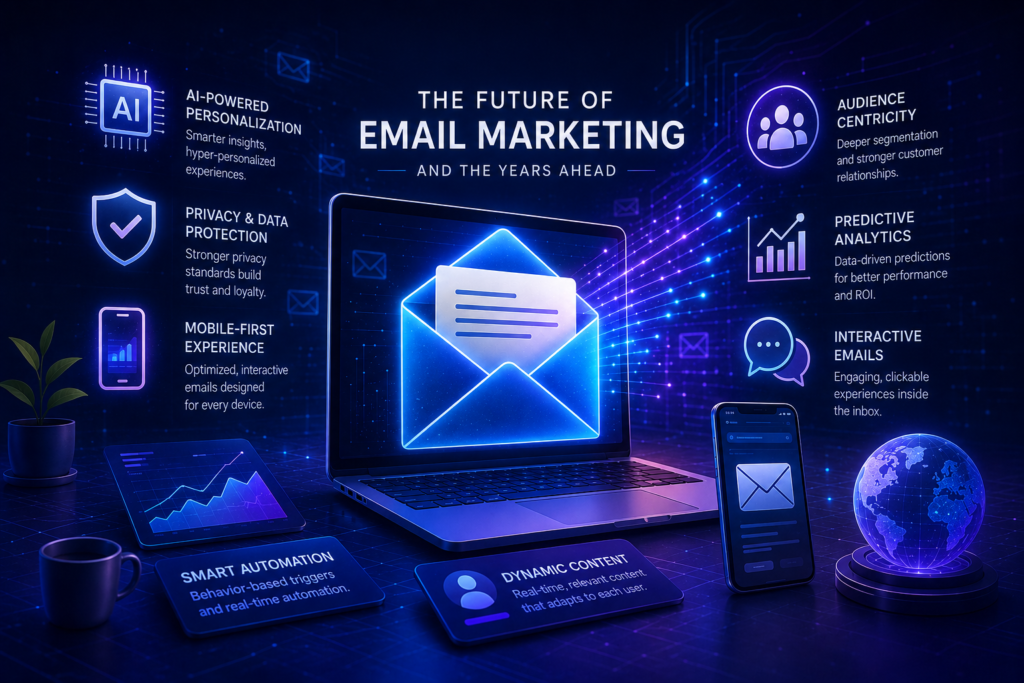
Email marketing is no longer a static, one-size-fits-all communication channel. As technology evolves and user expectations change, email marketing is becoming smarter, more personalized, and more interactive. For beginners and seasoned marketers alike, understanding these trends is crucial to stay ahead of the curve.
1. AI-Powered Personalization
Artificial intelligence is revolutionizing email marketing. In the near future:
- AI will analyze subscriber behavior to predict what type of content each user prefers.
- Emails will be dynamically generated for each individual, showing products, offers, or content most likely to engage them.
- Subject lines, send times, and even visuals will be optimized automatically based on data-driven insights.
For beginners, this means less guesswork and more opportunities to create highly effective campaigns.
2. Hyper-Segmentation and Micro-Targeting
Segmentation is already a best practice, but the future is hyper-segmentation:
- Instead of broad categories like “new customers” or “returning customers,” lists will be broken down by micro-behaviors such as:
- Pages visited on your website
- Videos watched
- Engagement with past emails
- Micro-targeting allows marketers to send exactly the right message at exactly the right time, increasing conversions and reducing unsubscribes.
This trend makes email campaigns feel less like marketing and more like a personalized conversation.
3. Interactive Emails
Traditional static emails are quickly being replaced by dynamic, interactive content. Interactive emails allow users to engage directly within the email itself:
- Polls, quizzes, and surveys
- Clickable product carousels
- Embedded forms for sign-ups or RSVPs
- Mini-games or contests
These elements increase engagement rates because users don’t have to leave their inbox to take action. For small businesses, this means more interaction without needing additional web pages.
4. Privacy-First Marketing
Privacy regulations like GDPR and CCPA have already reshaped how marketers collect and use email data. In 2026, privacy will continue to drive change:
- Businesses will need to be more transparent about how they collect, store, and use subscriber data.
- Permission-based marketing will be non-negotiable—users will want control over the types of emails they receive.
- First-party data (information you collect directly from subscribers) will become more valuable than ever.
Email marketing will thrive because it is inherently consent-driven, giving subscribers control over their inbox experience.
5. Automation Beyond the Basics
Email automation is no longer limited to simple triggers like “welcome emails” or “abandoned cart reminders.” The future will bring:
- Multi-step, behavior-driven workflows tailored to each user’s journey
- AI-based adjustments in real time based on engagement
- Automated testing and optimization without manual intervention
For beginners, this means that once you set up your campaigns, the system can adapt dynamically, continuously improving performance.
6. Integration With Omnichannel Marketing
Email will no longer exist in isolation:
- Emails will integrate seamlessly with SMS, social media, push notifications, and in-app messaging.
- Subscribers may receive part of the experience via email and part via another channel, creating a unified journey.
- This omnichannel approach ensures your message is seen wherever your audience is most active.
Marketers who embrace this integration will build stronger, more consistent relationships with their audience.
7. Voice and AI Assistants
With the rise of AI assistants like Alexa, Google Assistant, and Siri, voice may influence email consumption:
- Emails may be read aloud on-demand through smart speakers.
- Content may need to be structured for voice accessibility, emphasizing clear headings and short sentences.
- Users could manage their emails hands-free using voice commands.
This emerging trend highlights the need for mobile-first and accessibility-focused email design.
8. Predictive Analytics for Smarter Campaigns
AI-powered predictive analytics will help marketers anticipate subscriber needs:
- Predict which subscribers are likely to churn
- Forecast which products or services a subscriber will buy next
- Optimize sending frequency and content based on predicted behavior
Predictive email marketing reduces trial-and-error and helps you deliver the right message to the right person at the right time.
9. Increased Focus on Engagement Metrics
Future email marketing will prioritize engagement quality over sheer list size:
- Metrics like clicks, replies, forwards, and time spent reading will matter more than open rates alone.
- Businesses will aim to create “engaged subscriber segments” rather than just growing the total number of subscribers.
- This focus ensures higher ROI and lower chances of emails being ignored or marked as spam.
10. Sustainability and Ethical Marketing
As digital fatigue grows, subscribers will respond positively to brands that respect their time and inbox:
- Fewer, more meaningful emails
- Transparent communication about frequency and content
- Emails that add genuine value rather than just selling
Conclusion
Email marketing remains one of the most effective digital marketing strategies, even in 2026. For beginners, it offers a powerful way to build relationships, nurture leads, and grow a business.
By understanding the basics, building a quality email list, creating valuable content, and leveraging automation, you can achieve impressive results.
Remember, success in email marketing for beginners doesn’t happen overnight. It requires consistency, experimentation, and a focus on providing value.
Start small, learn continuously, and improve with every campaign. Over time, email marketing can become one of your most valuable business assets.